Ferdinand Verbiest, a member of a Jesuit mission in China, designed a steam-powered vehicle around 1672. It was a 65 cm-long scale-model toy for the Chinese Emperor, that was unable to carry a driver or a passenger, but possibly was the first working steam-powered vehicle ('auto-mobile').[7][8][9] It is not known if Verbiest's model was ever built.[8]
Leonty Shamshurenkov, a Russian peasant, constructed a human-pedalled four-wheeled "auto-running" carriage in 1752, and subsequently proposed to equip it with odometer and to use the same principle for making a self-propelling sledge.[10]
Although Nicolas-Joseph Cugnot is often credited with building the first self-propelled mechanical vehicle or automobile in about 1769, by adapting an existing horse-drawn vehicle, this claim is disputed by some[citation needed], who doubt Cugnot's three-wheeler ever ran or was stable. What is not in doubt is that Richard Trevithick built and demonstrated his Puffing Devil road locomotive in 1801, believed by many to be the first demonstration of a steam-powered road vehicle, although it was unable to maintain sufficient steam pressure for long periods, and would have been of little practical use.
In the 1780s, a Russian inventor of merchant origin, Ivan Kulibin, developed a human-pedalled, three-wheeled carriage with modern features such as a flywheel, brake, gear box, and bearings; however, it was not developed further.[11]
François Isaac de Rivaz, a Swiss inventor, designed the first internal combustion engine, in 1806, which was fueled by a mixture of hydrogen and oxygen and used it to develop the world's first vehicle, albeit rudimentary, to be powered by such an engine. The design was not very successful, as was the case with others, such as Samuel Brown, Samuel Morey, and Etienne Lenoir with his hippomobile, who each produced vehicles (usually adapted carriages or carts) powered by clumsy internal combustion engines.[12]
In November 1881, French inventor Gustave Trouvé demonstrated a working three-wheeled automobile that was powered by electricity. This was at the International Exhibition of Electricity in Paris.[13]
Although several other German engineers (including Gottlieb Daimler, Wilhelm Maybach, and Siegfried Marcus) were working on the problem at about the same time, Karl Benz generally is acknowledged as the inventor of the modern automobile.[12]
An automobile powered by his own four-stroke cycle gasoline engine was built in Mannheim, Germany by Karl Benz in 1885, and granted a patent in January of the following year under the auspices of his major company, Benz & Cie., which was founded in 1883. It was an integral design, without the adaptation of other existing components, and included several new technological elements to create a new concept. This is what made it worthy of a patent. He began to sell his production vehicles in 1888.

A photograph of the original
Benz Patent Motorwagen, first built in 1885 and awarded the patent for the concept
In 1879, Benz was granted a patent for his first engine, which had been designed in 1878. Many of his other inventions made the use of the internal combustion engine feasible for powering a vehicle.
His first Motorwagen was built in 1885, and he was awarded the patent for its invention as of his application on January 29, 1886. Benz began promotion of the vehicle on July 3, 1886, and about 25 Benz vehicles were sold between 1888 and 1893, when his first four-wheeler was introduced along with a model intended for affordability. They also were powered with four-stroke engines of his own design. Emile Roger of France, already producing Benz engines under license, now added the Benz automobile to his line of products. Because France was more open to the early automobiles, initially more were built and sold in France through Roger than Benz sold in Germany.
In 1896, Benz designed and patented the first internal-combustion flat engine, called a boxermotor in German. During the last years of the nineteenth century, Benz was the largest automobile company in the world with 572 units produced in 1899 and, because of its size, Benz & Cie., became a joint-stock company.
Daimler and Maybach founded Daimler Motoren Gesellschaft (Daimler Motor Company, DMG) in Cannstatt in 1890, and under the brand name, Daimler, sold their first automobile in 1892, which was a horse-drawn stagecoach built by another manufacturer, that they retrofitted with an engine of their design. By 1895 about 30 vehicles had been built by Daimler and Maybach, either at the Daimler works or in the Hotel Hermann, where they set up shop after disputes with their backers. Benz and the Maybach and the Daimler team seem to have been unaware of each other's early work. They never worked together because, by the time of the merger of the two companies, Daimler and Maybach were no longer part of DMG.
Daimler died in 1900 and later that year, Maybach designed an engine named Daimler-Mercedes, that was placed in a specially-ordered model built to specifications set by Emil Jellinek. This was a production of a small number of vehicles for Jellinek to race and market in his country. Two years later, in 1902, a new model DMG automobile was produced and the model was named Mercedes after the Maybach engine which generated 35 hp. Maybach quit DMG shortly thereafter and opened a business of his own. Rights to the Daimler brand name were sold to other manufacturers.
Karl Benz proposed co-operation between DMG and Benz & Cie. when economic conditions began to deteriorate in Germany following the First World War, but the directors of DMG refused to consider it initially. Negotiations between the two companies resumed several years later when these conditions worsened and, in 1924 they signed an Agreement of Mutual Interest, valid until the year 2000. Both enterprises standardized design, production, purchasing, and sales and they advertised or marketed their automobile models jointly, although keeping their respective brands.
On June 28, 1926, Benz & Cie. and DMG finally merged as the Daimler-Benz company, baptizing all of its automobiles Mercedes Benz, as a brand honoring the most important model of the DMG automobiles, the Maybach design later referred to as the 1902 Mercedes-35 hp, along with the Benz name. Karl Benz remained a member of the board of directors of Daimler-Benz until his death in 1929, and at times, his two sons participated in the management of the company as well.
In 1890, Émile Levassor and Armand Peugeot of France began producing vehicles with Daimler engines, and so laid the foundation of the automobile industry in France.
The first design for an American automobile with a gasoline internal combustion engine was drawn in 1877 by George Selden of Rochester, New York, who applied for a patent for an automobile in 1879, but the patent application expired because the vehicle was never built. After a delay of sixteen years and a series of attachments to his application, on November 5, 1895, Selden was granted a United States patent (U.S. Patent 549,160) for a two-stroke automobile engine, which hindered, more than encouraged, development of automobiles in the United States. His patent was challenged by Henry Ford and others, and overturned in 1911.
In Britain, there had been several attempts to build steam cars with varying degrees of success, with Thomas Rickett even attempting a production run in 1860.[14] Santler from Malvern is recognized by the Veteran Car Club of Great Britain as having made the first petrol-powered car in the country in 1894[15] followed by Frederick William Lanchester in 1895, but these were both one-offs.[15] The first production vehicles in Great Britain came from the Daimler Motor Company, a company founded by Harry J. Lawson in 1896, after purchasing the right to use the name of the engines. Lawson's company made its first automobiles in 1897, and they bore the name Daimler.[15]
In 1892, German engineer Rudolf Diesel was granted a patent for a "New Rational Combustion Engine". In 1897, he built the first Diesel Engine.[12] Steam-, electric-, and gasoline-powered vehicles competed for decades, with gasoline internal combustion engines achieving dominance in the 1910s.
Although various pistonless rotary engine designs have attempted to compete with the conventional piston and crankshaft design, only Mazda's version of the Wankel engine has had more than very limited success.


 is the velocity gradient perpendicular to the direction of shear
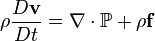
 is the fluid density,
 is the
  is the velocity vector,
 is the body force vector, and
 is a tensor that represents the surface forces applied on a fluid particle (the
 are normal stresses,
 are tangential stresses (shear stresses).